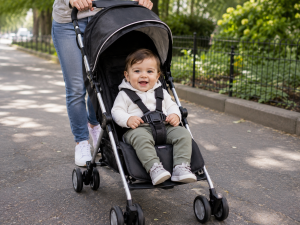
If you’re asking when can baby sit up in stroller, the answer is usually around 6 months. Most babies are ready when they have good head and neck control and can sit with support. I found that age is only part of the story, because some babies are ready a little sooner and some need more time. In this guide, I’ll show you the signs to watch for, how stroller type changes things, and how to tell when your baby is truly read
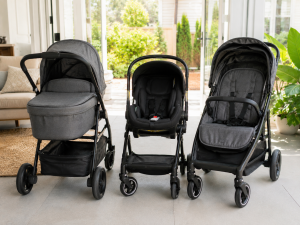
Quick Answer Block: when can baby sit up in stroller
Most babies can sit up in a stroller seat at around 6 months old, but age is only part of the story. What matters more is head control, neck strength, and the ability to stay upright with support. If your baby still slumps, folds forward, or cannot hold their head steady during movement, it is too soon for a regular stroller seat.
I learned this the hard way when I assumed “almost 6 months” meant “ready.” It didn’t. My baby looked fine sitting on the floor with support, but in the stroller seat, the posture was different. The seat angle changed everything. That was my first clue that when can baby sit up in stroller is not really an age question. It is a readiness + stroller design question.
Readiness Milestones Before Age: when can baby sit up in stroller
The fastest answer is this: a baby should have solid head and neck control before sitting in a stroller seat. If the head still wobbles a lot or drops forward during movement, the baby is not ready for a more upright seat.
I always tell parents to watch the baby, not just the calendar. Two babies can be the same age and need very different stroller setups. One may be fine in a reclined stroller seat at 5 months. Another may still need a flatter position at 7 months. That is normal.
Head control, neck strength, and trunk stability
A stroller ride looks gentle, but it asks a lot from a baby’s body. The seat may be reclined, but the baby still has to manage bumps, turns, and little shifts in balance. That means the neck, shoulders, and core all have to work together.
What I look for is simple:
baby holds their head steady when the stroller moves
baby does not fold at the waist
baby stays centered instead of leaning hard to one side
baby can sit with support for a short outing without looking floppy
If those pieces are missing, I wait.
Why “around 6 months” is only a rough guide
You will see “around 6 months” everywhere. That advice is not wrong. It is just incomplete. Six months is a common milestone, not a safety pass.
A better way to think about it is this: 6 months is a checkpoint, not a guarantee. Some babies are ready a bit before that in a deeply reclined stroller seat. Others are not ready until after 6 months, especially if they are still building trunk strength or tire quickly.
What changes if your baby was born early or is smaller than average
If your baby was born early, or is just taking a slower path with core strength, I would be more cautious with upright stroller use. I do not mean anxious. I just mean more observant.
A smaller baby can look “old enough” by calendar age but still need more support in real life. In that case, I would lean on the stroller’s recline, the baby’s actual posture, and the pediatrician’s guidance if there are any delays or concerns.
Stroller Types Change the Safe Timing: when can baby sit up in stroller
This is the part many articles skip, and I think it is one of the biggest reasons parents get confused. The stroller type changes the answer. A bassinet stroller, a travel system, and an umbrella stroller do not ask the same thing from a baby’s body.
A baby may be too young for one stroller setup but perfectly fine in another. That is why I never answer this question without talking about the seat style first.
Bassinet stroller setups made for newborns
Bassinet strollers are the easiest answer for newborns. They let the baby lie flat, which takes the pressure off the neck and trunk. If I had a newborn and wanted long walks, this would be one of my favorite setups.
Flat support is simple. It works with the baby’s body instead of asking the baby to “perform” in the seat.
Infant car seat travel systems vs standard stroller seats
Travel systems are also common in the early months. In that setup, the baby stays in the infant car seat and clicks into the stroller frame or stroller base. That means the stroller seat itself is not doing the support work yet.
This is often the easiest bridge between the newborn phase and the regular stroller seat. It is also one reason parents sometimes move too fast later. The baby does fine in the infant car seat, so it feels like the stroller seat should be fine too. Not always.
Full-size strollers with deep recline
A full-size stroller with a deep recline can work earlier than an upright lightweight stroller. Some models are newborn-safe when fully reclined. Others are not. This is where the manual matters.
The seat may look soft and roomy, but what matters is how flat it gets and whether the brand says it is safe from birth or for older babies only.
Umbrella and lightweight strollers that usually need an older baby
This is the category that gets rushed most often. Lightweight and umbrella strollers are so convenient that many parents want to switch early. I get it. They are easy to fold, easy to carry, and take up less space.
But many of them have a shallower recline and less side support. That means they often work better once the baby can sit well and hold posture for longer.
Age vs Ability: a quick way to judge stroller-seat readiness
If you want the shortest practical version, use this rule: match the baby’s body control to the seat angle and support. That works better than guessing by age alone.
A baby may be old enough by age but still not ready for a regular stroller seat. The safer call comes from matching your baby’s body control to the stroller’s seat angle and support.
| Baby stage | What usually works best |
|---|---|
| Newborn to about 4 months | Bassinet, infant car seat, or flat-recline stroller |
| Around 4 to 6 months | Reclined stroller seat if head and neck control are strong |
| Around 6 months and up | Standard stroller seat if baby sits steadily with support |
Why this matters: A stroller seat that is too upright too soon can let a baby slump forward, lean sideways, or lose head support during a walk.
Seat Recline and Support Matter More Than Most Parents Think: when can baby sit up in stroller
I used to think “recline” was mostly about naps. It is not. Recline is one of the biggest safety and comfort tools you have in a stroller.
The more upright the seat, the more the baby has to do the work. A flatter seat gives the baby more support. That sounds obvious, but it matters a lot in the messy middle stage when your baby is not a newborn anymore but also not quite ready for a regular stroller seat.
Flat, deep-recline, and upright seat positions
A flat or near-flat seat is best for newborns and younger babies. A medium recline can work for babies who are gaining control but still need support. An upright seat is best once a baby can stay stable without folding or sliding.
The mistake I made once was thinking a “slight recline” was enough because it looked comfortable. It looked fine for five minutes. Then I noticed the head drifting forward. That was enough for me to back up and use a deeper recline.
How side support and harness fit affect comfort and posture
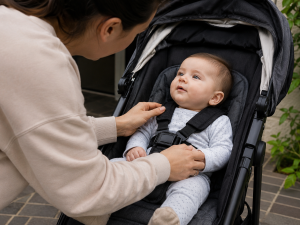
Support is not just about recline. It is also about whether the baby stays centered in the seat. If the harness is too loose, too low, or not adjusted well, the baby can slump even if the seat angle is okay.
Side support matters too. Some stroller seats hold a smaller baby better. Others feel wide and open, which is fine for an older baby but not always great for one still learning to stay upright during movement.
Why a baby can do fine in one stroller but not another
This is one of those little truths that makes parents doubt themselves. A baby may seem perfectly fine in one stroller and floppy in another. That does not mean you are imagining it.
Seat shape, recline depth, harness geometry, padding, and even how the stroller handles bumps can change the experience. So if one stroller works and another does not, the answer may be the stroller, not the baby.
Signs Your Baby Is Ready to Sit Up in a Stroller Seat
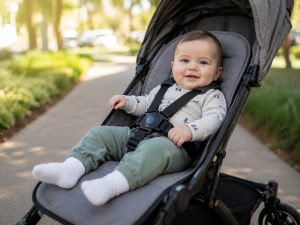
The short answer here is simple: your baby should stay stable in the stroller seat without slumping. That is the sign I care about most.
Holds head steady during movement
A baby who can hold their head steady when the stroller rolls over small bumps is usually in a much better place for stroller-seat use than a baby whose head still bobs around.
Sits with support without folding forward
I do not expect perfect independent sitting in the stroller. But I do want to see that the baby can sit with the stroller’s support without folding in half.
Stays centered instead of leaning hard to one side
A little lean now and then is not unusual. A strong tilt, repeated slumping, or always ending up sideways tells me the seat is asking for more control than the baby has right now.
Tolerates short stroller rides without slumping
I like to test short rides first. Ten or fifteen minutes can tell you a lot. If the baby starts upright and ends up folded, that is useful information.
Signs It’s Too Soon to Use the Main Stroller Seat
The easiest answer is this: if posture falls apart during the ride, it is too soon. That is my rule.
Chin drops to chest when the stroller moves
This is a big one. If the baby’s chin keeps dropping to the chest, I would stop using that position and go back to a flatter setup.
Baby slides down even with the harness adjusted
Sliding down usually means the baby does not have enough support for the seat angle or the harness fit needs work. Sometimes it is both.
Frequent side-leaning or head bobbing
A baby should not look like they are trying to stay upright in a strong wind. If the head and body keep wobbling, the stroller seat is probably too much right now.
Fussiness that looks more like poor support than normal boredom
This one surprised me. I once thought my baby was just tired and cranky in the stroller. Later I realized the seat was too upright and the fussing started every time posture got awkward. Sometimes the complaint is not boredom. It is discomfort.
When the Answer Is Yes, No, or “Only With the Right Stroller”: when can baby sit up in stroller
The short version is this:
Yes if the baby has strong head control and the stroller seat is supportive
No if the baby still needs full head and neck support
Maybe if the baby is in that in-between stage and the stroller has a deep recline
I know that “it depends” can be annoying, but in this case it is the honest answer. The goal is not to hit a date. The goal is to use the right setup for the baby in front of you.
Newborn-Safe Strollers vs 6-Month Strollers: when can baby sit up in stroller
Some strollers are built for birth, while others are not safe until a baby has much better posture control. This is where many parents get tripped up because the stroller category matters just as much as the baby’s age.
| Stroller setup | Typical starting point |
|---|---|
| Bassinet attachment | From birth |
| Infant car seat travel system | From birth with compatible car seat |
| Standard stroller seat with full recline | Sometimes from birth, depending on model |
| Lightweight or umbrella stroller | Often 6 months and up |
Science behind it: The less a seat reclines, the more the baby has to do the work of holding their own head, neck, and torso in position.
Real-World Situations That Can Delay or Speed Up the Switch
Real life changes the answer more than people admit. A baby may look ready for a short neighborhood walk but not for a long zoo day, a rough sidewalk, or a stroller nap.
Short neighborhood walks vs long outings
A ten-minute walk is not the same as a two-hour outing. Babies tire out. Posture gets worse when they are tired. I always judge stroller readiness on the longer, harder version of the outing, not the easiest one.
Awake stroller rides vs nap-time stroller use
A baby who can stay upright while awake may slump badly once drowsy. Sleep changes posture. That is one reason I like more recline during nap-time outings, even if the baby can handle a more upright seat when alert.
Winter layers, bunting bags, and how bulk changes posture
Bulky layers can push a baby into an awkward position. They can also make the harness fit less well. In cold weather, I pay even more attention to whether the baby still looks centered and supported.
Big babies, low-tone babies, and babies who hit milestones later
Bigger babies are not always stronger babies. And smaller babies are not always less ready. I try not to make assumptions based on size alone. I watch posture, stamina, and how the baby actually does in the seat.
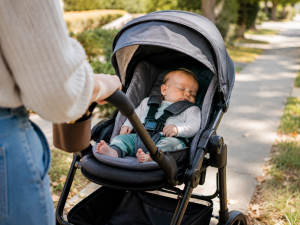
Common Parent Mistakes With Stroller Sitting Readiness
The fastest answer here is that parents often switch based on convenience, not readiness. I say that with love because I have done it too.
Using “can sit in a high chair” as the only test
A baby sitting in a high chair for a few minutes is not the same as riding in a stroller over bumps and turns. Similar? Yes. The same? Not quite.
Moving to an umbrella stroller for convenience too early
Umbrella strollers are tempting because they are light and easy. But convenience can trick us into moving too soon.
Assuming a padded insert makes an upright seat newborn-safe
This is a big one. A soft insert can add comfort, but it does not turn an upright stroller into a newborn-safe seat. The stroller’s design still matters.
Forgetting to check the stroller manual’s minimum age and recline guidance
This is the least glamorous advice and maybe the most important. The manual matters because it tells you how that specific stroller was tested and intended to be used.
Safer Alternatives If Baby Is Not Ready Yet: when can baby sit up in stroller
If your baby is not ready, that does not mean you are stuck at home. It just means you need a setup that supports the baby better.
Stay with the infant car seat and stroller frame a bit longer
This is often the easiest option for errands and short trips, especially in the early months.
Use the bassinet attachment for longer walks
If you have a bassinet stroller, this is such a nice setup for walks. Baby stays flat, cozy, and supported.
Keep the stroller seat in its deepest safe recline
If your stroller allows newborn or younger infant use in a deep recline, use that feature. It can buy you time before switching to a more upright seat.
Save the lightweight stroller for later errands and travel
I know the lightweight stroller is tempting. I still think it is worth waiting until the baby can really use it well.
How to Transition Into the Main Stroller Seat Without Rushing It
The short answer is to ease into it. You do not have to jump from full support to fully upright in one day.
Start with the most reclined seat position
This gives the baby the best chance to succeed. You can always move more upright later.
Test short rides before longer outings
I love this step because it removes pressure. Try a short walk. Watch the baby’s posture. See what happens when the stroller turns, stops, and rolls over small bumps.
Recheck harness height and strap snugness after the switch
A poor harness fit can make a baby look less ready than they really are. Or it can hide the fact that the seat angle is still too much. Either way, fit matters.
Watch posture, not just mood, during the first few trips
A happy baby is great, but posture tells the deeper truth. I always watch the head, neck, and hips first.
What to Check on the Stroller Before Letting Baby Sit Up
Before moving a baby upright, the stroller itself deserves a quick check. Some seats look supportive but have a shallow recline, low side support, or a harness position that does not fit a younger baby well.
| What to inspect | Why it matters |
|---|---|
| Recline range | Tells you how much support the stroller can give |
| Harness height and fit | Helps keep baby centered and secure |
| Side padding and seat depth | Affects posture and comfort on longer rides |
Why this step helps: Two babies with the same age can do very differently depending on the seat shape, recline, and harness geometry of the stroller.
Expectation vs Reality: What “6 Months” Leaves Out
This is the part I wish someone had told me sooner. “Around 6 months” is helpful as a starting point, but it leaves out the details that actually make the day-to-day decision easier.
Why milestone charts don’t account for stroller design
Charts talk about babies in general. Strollers are not general. Some are deep and supportive. Some are upright and minimal. That difference matters.
Why one baby may be ready at five months and another at seven
Babies build control at different speeds. They also have different temperaments, body sizes, and tolerance for being in the seat. There is a wide range of normal here.
Why “looks fine for five minutes” is not the same as truly ready
This one gets me every time. A baby can look great for the first few minutes. The real test is what happens after a little time, a few bumps, maybe a yawn, and a shift in position.
When to Wait Longer Before Baby Sits Up in a Stroller
The short answer is to wait longer if your baby still looks floppy, tired, or poorly supported in the seat.
Premature babies or babies with delayed trunk control
If milestones are coming a bit later, I would be slower to move upright. That is not a setback. It is just matching the stroller to the baby’s body.
Babies who still slump in a reclined seat
If the baby is slumping even with a good recline, that is a clear sign to hold off.
Strollers with limited recline and minimal side support
Sometimes the baby is not the problem. The stroller just is not a good fit for this stage.
Long day trips where posture fatigue shows up fast
A baby may do okay for ten minutes and struggle at forty. If you are planning longer outings, I would make decisions based on the longer window, not the shortest ride.
By the end of all this, my own rule became very simple: if my baby can stay supported, centered, and comfortable for the whole ride, the stroller setup is probably okay. If posture falls apart, I am asking for too much too soon. That one rule has helped me more than any age label ever did.