
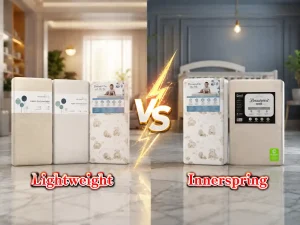
Lightweight vs innerspring crib mattress is a comparison I took seriously after spending months waking up at midnight to change wet sheets in the dark. Lifting a heavy mattress while holding a crying baby was pure chaos. I bought and tested both types to see which one made daily life easier. In this review, I compare my everyday experience with each mattress, including weight, convenience, and safe-sleep considerations. You’ll learn which option may be easier on your back while still providing your baby with a firm, safe sleep surface.
I started my testing with the lightweight foam model to see how easy it was to lift and handle during nighttime sheet changes.

Lightweight Crib Mattress Review
I put this light foam bed in the room on a sunny Monday. It felt so light that I could lift it with just two fingers. My baby slept on it very well right from the first night. The top felt smooth and the frame stayed very flat.
Here is a quick look at what worked well and what caused some minor trouble.
Pros and Cons of Lightweight
I tracked all the good and bad points over time. This list points out the main things you need to know.
Using this bed every day showed me its true daily worth during late nights.

Living With The Lightweight Bed
I used this foam bed in the nursery for three full months. The best part was how easy it was to change the fitted sheet. I could lift the whole mattress with one arm while holding my baby. That saved my sore back during late night diaper leaks.
The only small issue was that the edges felt a little soft when I pressed down. But it never sagged in the middle where my baby slept. It stayed cool enough during warm naps and never trapped bad odors.
Checking who will benefit most helps narrow down your final buying choice.

Lightweight Recommendation
See if this bed is the right fit for your home. Here is my quick guide based on my daily use.
Next, I tried out the coil bed to see how traditional springs hold up.

Innerspring Crib Mattress Review
I unpacked this heavy steel coil bed on a chilly morning. It felt very stiff and solid right out of the plastic wrap. The sides were strong and did not bend when I pushed on them. My baby slept very flat and safe on the firm top. It felt like a mini adult bed for the crib.
Take a look at the positive points alongside the drawbacks I noticed during use.
Pros and Cons of Innerspring
I tracked all the good and bad points over time. This list points out the main things you need to know.
Spending several weeks with this option highlighted its key practical qualities.

Living With The Innerspring Bed
I kept this spring bed in the room for three whole months. The firm steel coils held my baby perfectly flat with zero dipping. I never had to worry about soft spots near the corners or edges. It felt very sturdy and built to last for years.
However, changing sheets was a real workout for my arms. Lifting twenty pounds of steel and foam in the dark got annoying fast. But if you want maximum edge support and long term shape, it works great.
Reviewing suitable user types will show if this heavy option matches your needs.

Innerspring Recommendation
Find out who should buy this bed and who should wait. This simple list will guide your choice.
Comparing both mattresses head-to-head makes the core differences much clearer.
Detailed Comparison for Lightweight Vs Innerspring Crib Mattress
Let us look at how both beds match up side by side. I broke down my notes into five main points. I used these beds long enough to see the real truth.
I checked how well each bed supports a sleeping baby safely.
Firmness Support: Lightweight Vs Innerspring Crib Mattress
Both options give you a firm surface for safe baby sleep. The lightweight bed uses dense foam that stays flat under a small body. It gives just enough cushion while holding the baby safe.
The innerspring bed uses strong steel coils that do not bend. It feels much stiffer across the entire top surface. Both beds pass safety needs, but the coils feel more rigid.
Lightweight Rating: 8/10 Innerspring Rating: 9/10
Next, I evaluated how easy each bed is to handle every day.

Ease of Use: Lightweight Vs Innerspring Crib Mattress
Handling the lightweight bed is a total breeze for anyone. You can pull it out of the crib frame with one hand easily. This makes midnight sheet swaps much faster when you are tired.
The innerspring bed is much heavier and harder to lift. You need both hands to lift the corners up to slip sheets on. The light foam bed wins big for everyday comfort and ease.
Lightweight Rating: 10/10 Innerspring Rating: 6/10
Then, I looked at how well each mattress holds up over time.
Build Quality: Lightweight Vs Innerspring Crib Mattress
The build quality differs a lot between foam and steel coils. The foam bed uses light layers that stay quiet and clean. It holds its shape well if you buy a high density model.
The innerspring bed is built like a tank with steel borders. It resists wear from bouncing toddlers much better over time. If you want a bed to pass down to a second child, coils win.
Lightweight Rating: 7/10 Innerspring Rating: 9/10
After that, I checked how air moves through each bed structure.
Breathability: Lightweight Vs Innerspring Crib Mattress
Air flow is important for keeping your baby cool while sleeping. The lightweight bed relies on open cell foam to let air move. It stays fairly cool, but solid foam can hold some body heat.
The innerspring bed has open spaces between the metal coils inside. Air flows freely through the core when the baby moves. This keeps the sleeping surface cooler on hot summer nights.
Lightweight Rating: 7/10 Innerspring Rating: 9/10
Last of all, I considered the overall financial value offered by each option.

Value for Money: Lightweight Vs Innerspring Crib Mattress
Both styles come in a wide range of price points to fit your budget. Lightweight foam beds are often cheaper to buy upfront. They offer great value if you want a low cost, easy option.
Innerspring beds cost a bit more due to the metal parts. But they last much longer without losing their shape or support. Both offer solid value depending on whether you want light weight or long life.
Lightweight Rating: 9/10 Innerspring Rating: 8/10
Here is a summary of how these two options compare for your final choice.
Conclusion
Both crib mattress types provide safe and firm sleep for your baby. The lightweight mattress wins for easy sheet changes and painless lifting. The innerspring mattress offers stiffer edges and longer lasting build quality. Choose the light foam option if you value convenience, or pick coils for maximum durability.
Here are answers to the most common questions parents ask about these models.
FAQs for Lightweight Vs Innerspring Crib Mattress
Here is what you need to know about lifting and handling these beds.
Is a Lightweight Vs Innerspring Crib Mattress easier to lift?
A lightweight foam mattress weighs under ten pounds, making sheet swaps simple with one hand. Innerspring models weigh up to thirty pounds and require two hands to lift.
Here is what you need to know about infant sleep safety standards.
Is a Lightweight Vs Innerspring Crib Mattress safer for infants?
Both mattress styles are safe as long as they are firm and fit tight in the crib frame. Neither style should sag or sink under your baby’s head weight.
Here is what to expect regarding product lifespan and wear.
Which lasts longer: Lightweight Vs Innerspring Crib Mattress?
Innerspring mattresses usually last longer because steel coils hold their shape for years. Lightweight foam beds can soften slightly after heavy daily use by toddlers.
Here is what you need to know about keeping the sleeping surface cool.
Which stays cooler: Lightweight Vs Innerspring Crib Mattress?
Innerspring mattresses tend to stay cooler because air moves freely between the metal coils. Solid foam cores can trap a small amount of body heat on hot nights.
Here is how the pricing breaks down between both style choices.
Which costs less: Lightweight Vs Innerspring Crib Mattress?
Lightweight foam mattresses are generally more affordable upfront. Innerspring mattresses cost more due to steel parts, but they offer great long term durability.

Shahin is the owner and creator of BabyCareAdvisor, a trusted resource for practical baby care and parenting guidance. He shares helpful, easy-to-understand information about baby products, car seats, strollers, breast pumps, baby safety, and everyday parenting. His goal is to help parents make informed decisions by providing clear, practical, and research-based advice.