
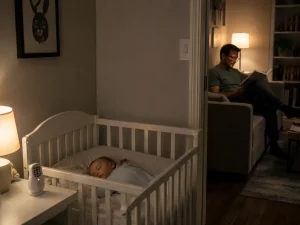
If you are not sure how to choose a baby monitor, start with the features that fit your home and your baby’s needs. The best baby monitor gives clear sound, a stable signal, and easy use without extra stress.
When I first looked at baby monitors, I was surprised by how many choices there were. I found that focusing on video quality, range, safety, and battery life made the decision much easier. In many U.S. homes, a strong signal and reliable night vision can be very helpful, especially in larger houses. This guide will help you choose a baby monitor with confidence and find the features that matter most for your family.
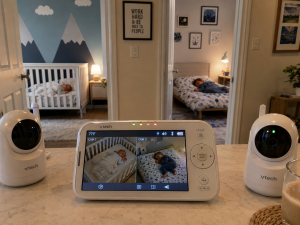
How to Choose a Baby Monitor: Quick Decision Guide
The best baby monitor depends on how you will use it.
If you want a strong and steady signal, choose a non-Wi-Fi video monitor.
If you travel often or spend time away from home, a Wi-Fi monitor may work better.
Many parents feel confused by all the choices. The good news is that picking a monitor is often easy.
Your home size, privacy needs, and daily routine matter more than extra features.
| Priority | Best Monitor Type | Best For |
|---|---|---|
| Strong signal | Non-Wi-Fi video monitor | Most families |
| Remote viewing | Wi-Fi smart monitor | Frequent travelers |
| Low cost | Audio monitor | Small homes |
| More than one child | Multi-camera monitor | Growing families |
Most parents make a better choice when they decide how they want to watch their child before they compare brands.
Know Your Needs First
When a Baby Monitor Helps Most
A baby monitor helps when you are not in the same room as your baby.
It lets you know what is happening without walking to the nursery all the time.
For example, a parent in a two-story home may check on a baby many times each hour. A monitor can make this much easier.
Monitors help during naps, bedtime, and quiet play.
They give peace of mind and save time.
When a Basic Monitor Is Enough
Not every family needs a monitor with many features.
A simple monitor often works well in a small home or apartment.
If your baby’s room is close to yours, an audio monitor may be enough.
Many parents only need to hear their baby.
Simple monitors also cost less. They are easier to set up and use.
Think About Your Home Size
Your home’s size affects monitor performance.
Large homes often need a monitor with better range.
Thick walls can weaken a signal.
Before you buy, think about where you spend most of your time while your baby sleeps.
This will help you choose the right range.
One Child or More Than One?
The number of children matters too.
A multi-camera monitor works well for families with more than one child.
Some systems let you switch between rooms.
Others show more than one room at the same time.
If you plan to have more children, an expandable system may save money later.
Types of Baby Monitors
Each type has its own strengths.
Choose the one that fits your needs.
| Monitor Type | Good Points | Limits |
|---|---|---|
| Audio | Low cost and simple | No video |
| Video | Lets you see your baby | Costs more |
| Wi-Fi | View from anywhere | Needs internet |
| Non-Wi-Fi | Strong and private connection | No remote viewing |
| Sensor-based | Extra tracking | May give false alerts |
More features do not always mean a better monitor.
For most families, ease of use and a strong connection matter most.
Audio Baby Monitors
Audio monitors let you hear your baby.
They are simple, low cost, and easy to use.
Many parents like them because there are fewer settings.
They work best in small homes.
Video Baby Monitors
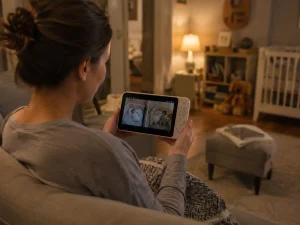
Video monitors let you see and hear your baby.
Many parents like the extra peace of mind.
You can quickly check if your baby is asleep, awake, or moving around.
This can reduce trips to the nursery.
Video monitors are now one of the most popular choices.
Wi-Fi Smart Baby Monitors
Wi-Fi monitors connect to your home network.
You can view the camera on your phone.
This makes it easy to check on your child when you are away from home.
It can also help grandparents or other caregivers.
Keep in mind that these monitors depend on internet service.
Security settings are important too.

Non-Wi-Fi Video Monitors
Non-Wi-Fi monitors connect the camera and parent unit directly.
They do not need internet access.
Many parents like them because they are simple and reliable.
They also offer strong privacy.
In many homes, they provide a more stable connection than Wi-Fi models.
Wearable and Sensor-Based Monitors
Some monitors include sensors.
These sensors track movement or other activity.
They can provide extra information.
However, they may also give false alerts.
False alerts can cause stress.
For many families, a good video monitor provides all the information they need.
FAQs for How to Choose a Baby Monitor
What should I look for when choosing a baby monitor?
Choose a baby monitor with clear sound, a stable signal, and easy controls. Think about your home size and the features you will use most.
Is a video baby monitor better than an audio baby monitor?
A video baby monitor lets you see your baby at any time. An audio monitor costs less and works well if you only need to hear sounds.
How important is battery life in a baby monitor?
Good battery life helps the monitor run longer without charging. This is useful at night and when you move around the house.
Should I choose a Wi-Fi baby monitor or a non-Wi-Fi model?
A Wi-Fi baby monitor allows remote viewing on your phone. A non-Wi-Fi model is often simpler and may offer fewer connection concerns.

Shahin is the owner and creator of BabyCareAdvisor, a trusted resource for practical baby care and parenting guidance. He shares helpful, easy-to-understand information about baby products, car seats, strollers, breast pumps, baby safety, and everyday parenting. His goal is to help parents make informed decisions by providing clear, practical, and research-based advice.